
Ibn Abidin
Son of Ali ibn al-Husayn; leader of an unsuccessful revolt against the Umayyads; martyr honored by all schools of Islam.

علاء · CC BY-SA 3.0
Zayd ibn ʿAlī (695–740), also spelled Zaid, was the son of Ali ibn al-Husayn Zayn al-Abidin and great-grandson of Ali ibn Abi Talib. He led an unsuccessful revolt against the Umayyad Caliphate, in which he died. The event gave rise to the Zaydiyya sect of Shia Islam, which holds him as the next Imam after his father. Zayd is also seen as a major religious figure by many Sunnis and was supported by the prominent Sunni jurist, Abu Hanifa, who issued a fatwa in support of Zayd against the Umayyads. To Twelver and Isma'ili Shias, his elder half-brother Muhammad al-Baqir is seen as the next Imam. He is considered an important revolutionary figure by Shias and a martyr by all schools of Islam. The call for revenge for his death and the brutal display of his body contributed to the Abbasid Revolution.
- known_for
- Leading an unsuccessful revolt against the Umayyad Caliphate; martyrdom; giving
Lore & Background
Zayd was born in Medina in 695 CE. His mother, known as Jayda al-Sindiyya, was from Sindh, according to Ibn Qutaybah and Abd al-Razzaq al-Hasani. He was a learned religious scholar. Various works are ascribed to him, including Musnad al-Imam Zayd, possibly the earliest known work of Islamic law, though the attribution is disputed and likely represents early Kufan legal tradition. He is believed the first narrator of Al-Sahifa al-Sajjadiyya of Imam Zainul-'Abidin. A handwritten manuscript of Majmu' al-Fiqh, dating back at least a thousand years, is preserved in the Vatican Library. In 2007, Sayyid Nafis Shah Al-Husayni re-issued it from Lahore. He was an excellent orator and spent much of his life learning and educating others. His half-brother Imam al-Baqir tested him on Quranic knowledge and remarked, 'For our father and mother's life! You are one of a kind. God grace your mother who gave you birth, she gave birth to a replica of your forefathers!' His nephew Imam Ja'far al-Sadiq said: 'Among us he was the best read in the Holy Qur'an, and the most knowledgeable about religion, and the most caring towards family and relatives.' Hence his title Ḥalīf Al-Qurʾān (Ally of the Qur'an).
Reader's Guide
Zayd's significance lies in his role as a revolutionary figure and martyr. In AH 122 (AD 740), he led an uprising against the Umayyad rule of Hisham ibn Abd al-Malik in Kufa. Initially supported by the people of Kufa, they abandoned him when he refused to renounce Umar and Abu Bakr, saying: 'May God have mercy on both of them and forgive them both! I have not heard anyone in my family renouncing them both nor saying anything but good about them.' Yusuf ibn Umar al-Thaqafi, the Umayyad governor of Iraq, bribed the inhabitants of Kufa, broke the insurgence, and killed Zayd. His death and the brutal display of his body contributed to the Abbasid Revolution. All schools of Islam regard Zayd as a righteous martyr. Imam Abu Hanifa gave financial support to Zayd's revolt and called on others to join. Zayd's rebellion inspired other revolts, most famously that of Imam Muhammad al-Nafs al-Zakiyya al-Mahdi against the Abbasids in 762. Zaydis believe he was a rightful Caliph, and their sect is named after him.
Did You Know?
- Zayd's mother, Jayda al-Sindiyya, was from Sindh, according to Ibn Qutaybah and Abd al-Razzaq al-Hasani.
- The only surviving handwritten manuscript of Majmu' al-Fiqh, dating back at least a thousand years, is preserved in the Vatican Library.
- Imam Abu Hanifa issued a fatwa in support of Zayd against the Umayyads and called on others to join his rebellion.
- Zayd's nephew Ja'far al-Sadiq wept uncontrollably upon hearing of his death and declared him a martyr equal to those who fought with the Prophet, Ali, al-Hasan, and al-Husayn.
- The call for revenge for Zayd's death and the brutal display of his body contributed to the Abbasid Revolution.
Lineage and Scholarly Legacy
Born in Medina in 695 CE, Zayd ibn Ali was the son of Ali ibn al-Husayn Zayn al-Abidin and great-grandson of Ali ibn Abi Talib. Ibn Qutaybah and Abd al-Razzaq al-Hasani identified his mother, Jayda al-Sindiyya, as a woman from Sindh. Zayd was a learned religious scholar. He is credited as the first narrator of Al-Sahifa al-Sajjadiyya. Several works of hadith, theology, and Qur'anic exegesis are attributed to him. The first work of Islamic jurisprudence, Mujmu'-al-Fiqh, is attributed to him. A handwritten manuscript of this work, dating back at least a thousand years, is preserved in the Vatican Library under 'Vaticani arabi'. Photocopies are available at the University of Birmingham. In 2007, Sayyid Nafis Shah Al-Husayni re-issued it from Lahore. His half-brother Imam al-Baqir tested him on Quranic knowledge and said: 'For our father and mother's life! You are one of a kind. God grace your mother who gave you birth, she gave birth to a replica of your forefathers!' Imam Ja'far al-Sadiq said: 'Among us he was the best read in the Holy Qur'an, and the most knowledgeable about religion, and the most caring towards family and relatives.' Hence his title Ḥalīf Al-Qurʾān.
The Uprising and Martyrdom
In AH 122 (AD 740), Zayd led an uprising against the Umayyad rule of Hisham ibn Abd al-Malik in Kufa. Initially supported by the people of Kufa, they abandoned him when he refused to renounce Umar and Abu Bakr, saying: 'May God have mercy on both of them and forgive them both! I have not heard anyone in my family renouncing them both nor saying anything but good about them.' Yusuf ibn Umar al-Thaqafi, the Umayyad governor of Iraq, bribed the inhabitants of Kufa, broke the insurgence, and killed Zayd. The call for revenge for his death and the brutal display of his body contributed to the Abbasid Revolution. His nephew Ja'far al-Sadiq, upon receiving the letter of Zayd's death, broke down and cried uncontrollably, proclaiming: 'From God we are and to Him is our return. I ask God for my reward in this calamity. He was a really good uncle. My uncle was a man for our world and for our Hereafter. I swear by God that my uncle is a martyr just like the martyrs who fought along with God's Prophet (s) or Ali (s) or Al-Hassan (s) or Al-Hussein (s).'
Reverence Across the Islamic World
Zayd was a revered member of the Bayt of Muhammad. The Sunni jurist Abu Hanifa issued a fatwa in support of Zayd against the Umayyads and said: 'I met with Zayd and I never saw in his generation a person more knowledgeable, as quick a thinker, or more eloquent than he was.' The Sufi scholar Sufyan al-Thawri said: 'Zayd took the place of Imam al-Husayn. He was the most versed human concerning Allah's holy book. I affirm: women have not given birth to the likes of Zayd.' Al-Shaykh Al-Mufid described him as 'a devout worshipper, pious, a jurist, God-fearing and brave.' The Umayyad caliph Umar ibn Abd al-Aziz was an associate of Zayd in Medina and continued to correspond with him after becoming caliph. Imam Ali ar-Ridha said: 'He (Zayd bin Ali) was one of the scholars from the Household of Muhammad and got angry for the sake of the Honorable the Exalted God. He fought with the enemies of God until he got killed in His path.'
Prophecy and Theological Legacy
Imam al-Baqir narrated that the Prophet Muhammad put his hand on al-Husayn's back and said: 'O Husayn, it will not be long until a man will be born among your descendants. He will be called Zaid; he will be killed as a martyr. On the day of resurrection, he and his companions will enter heaven, setting their feet on the necks of the people.' Imam Husayn also narrated this prophecy. The Zaydiyya sect holds Zayd as the next Imam after his father. Twelver and Isma'ili Shias see his elder half-brother Muhammad al-Baqir as the next Imam, but still consider Zayd an important revolutionary figure and a martyr. His title Ḥalīf Al-Qurʾān was bestowed by Ja'far al-Sadiq. All schools of Islam, Sunnis and Shias, regard Zayd as a righteous martyr against the corrupt leadership of an unjust king proclaimed to be a caliph.
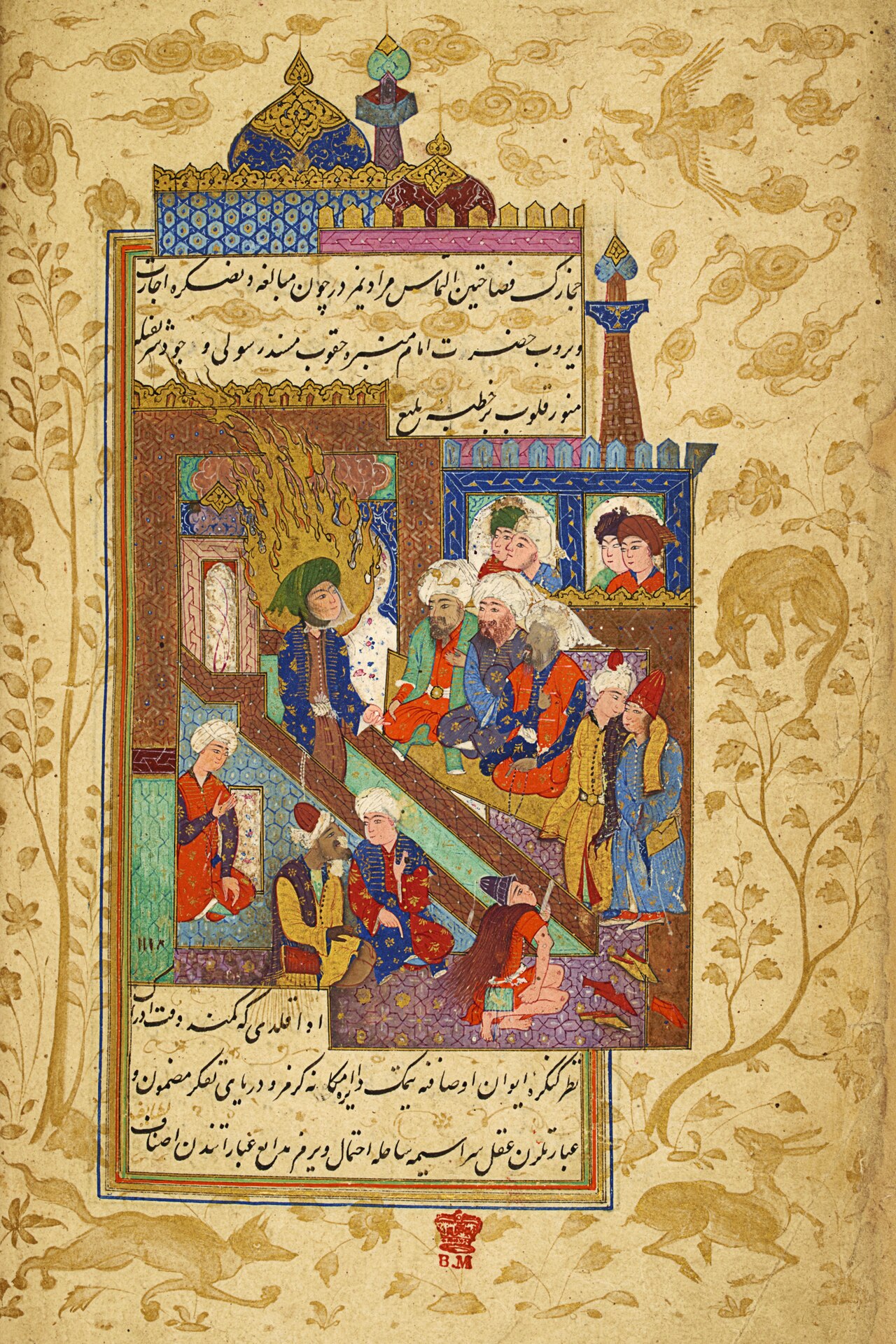
Gallery





Frequently Asked Questions
Who is Ibn Abidin?
Ibn Abidin (1784–1836 CE) was a Hanafi jurist based in Damascus during the Ottoman era, widely regarded as one of the most influential legal minds of his school. He is best remembered for producing a landmark commentary that still anchors Hanafi fiqh study today.
What is Ibn Abidin's most famous work?
His master commentary, Radd al-Muhtar 'ala al-Durr al-Mukhtar, functions as a go-to reference for Hanafi jurisprudence and is routinely consulted by students, judges, and scholars across the Muslim world.
What official role did Ibn Abidin hold?
He was appointed mufti of the Ottoman army garrisoned in Damascus, a position in which he issued binding legal rulings (fatwas) on questions referred to him by military and civilian alike.
What makes Ibn Abidin's legal methodology distinctive?
He was noted for actively incorporating urf—local custom and prevailing social practice—into his fatwas, ensuring that rulings reflected the lived reality of the communities he served rather than abstract precedent alone.
Why does Ibn Abidin still matter to students of Islamic law?
His commentary remains a cornerstone of Hanafi legal education, and his insistence that jurisprudence must account for local custom continues to shape how contemporary scholars frame and resolve legal questions.
More in Islamic Scholars & Mystics 1-23
Related in Islamic Scholars & Mystics
Links follow this subject's own source article.
Spotted an error? Know more?
This is a living reference — every entry is fact-audited, and reader corrections feed straight into our audit queue. Suggest an edit · See this site's audit record